India’s Inflection Point: Electoral Integrity, Corporate Scandal, and Media Control

India’s Triple Crisis: Is the World’s Largest Democracy at an Inflection Point?
By Sunil Poudel
India stands at a perilous crossroads. In a rare and unsettling convergence, the world’s most populous democracy is being rocked by three simultaneous crises—each striking at the core of its political, economic, and media institutions.
- A high-stakes battle over electoral integrity.
- A corporate scandal with global ramifications.
- A media landscape embroiled in a war for narrative control.
These are not isolated events. They are symptoms of a deeper malaise—a systemic stress test revealing the erosion of institutional independence, the tightening embrace of state–corporate power, and the capture of public discourse by partisan interests.
Crisis One: Electoral Integrity on Trial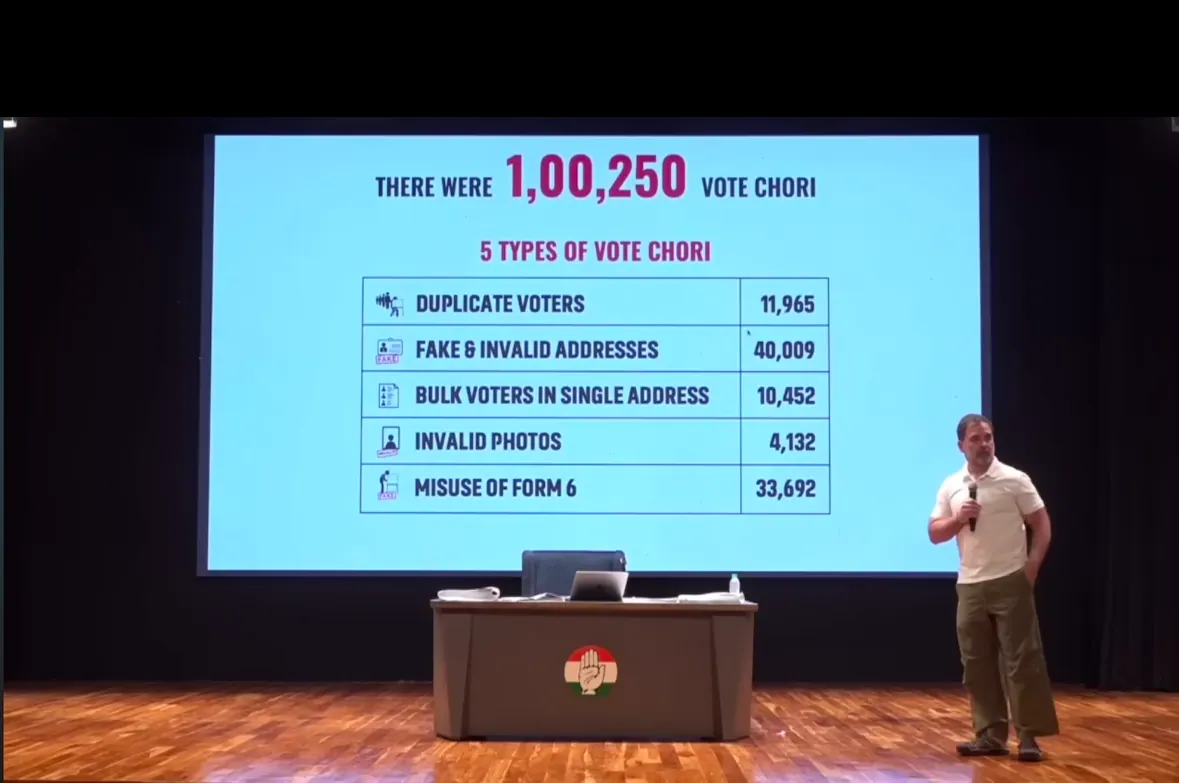

The political earthquake began when opposition leader Rahul Gandhi accused the Election Commission of India (ECI) of “institutional chori”—institutional theft.
But this wasn’t the usual dispute over voting machines. Gandhi’s attack was data-driven, targeting the sanctity of voter rolls themselves. His party cited the ECI’s own data from a single Bangalore parliamentary segment to claim over 100,000 “stolen” votes, pointing to five alleged fraud mechanisms:
- Duplicate Voters: People registered in multiple booths or even across states.
- Fake Addresses: Thousands of voters listed at non-existent or nonsensical locations.
- Bulk Registrations: Dozens—sometimes 80—voters registered to a single small room.
- Invalid Photos: Missing or unrecognizable images on voter IDs.
- Misused Forms: Fraudulent duplication through new registration applications.
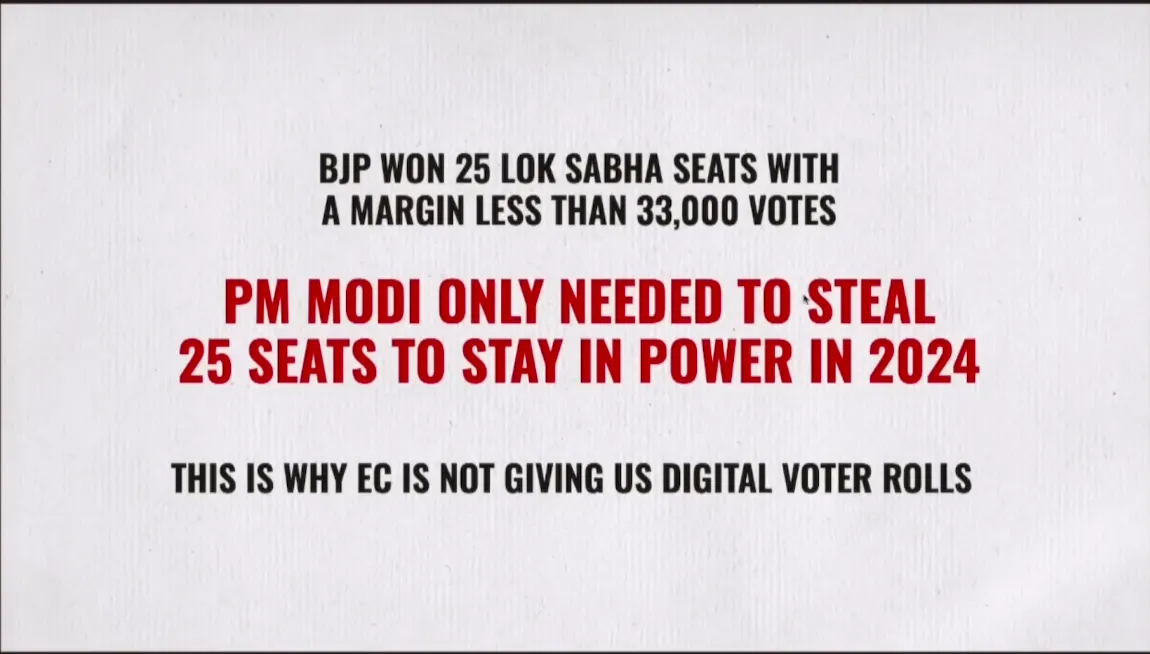

The ECI, historically among India’s most respected institutions, didn’t offer a transparent, point-by-point rebuttal. Instead, it demanded Gandhi submit his evidence under affidavit—a move critics called a procedural trap. Simultaneously, it dismissed the claims as the “tired script” of a losing party.
By opting for legalistic defense over transparency, the ECI only deepened the crisis of trust. When opposition leaders marched to its New Delhi headquarters in protest, police barricades, detentions, and viral images of politicians scaling barriers fueled the perception that dissent—both institutional and civic—was being strangled.

Crisis Two: The Corporate Quake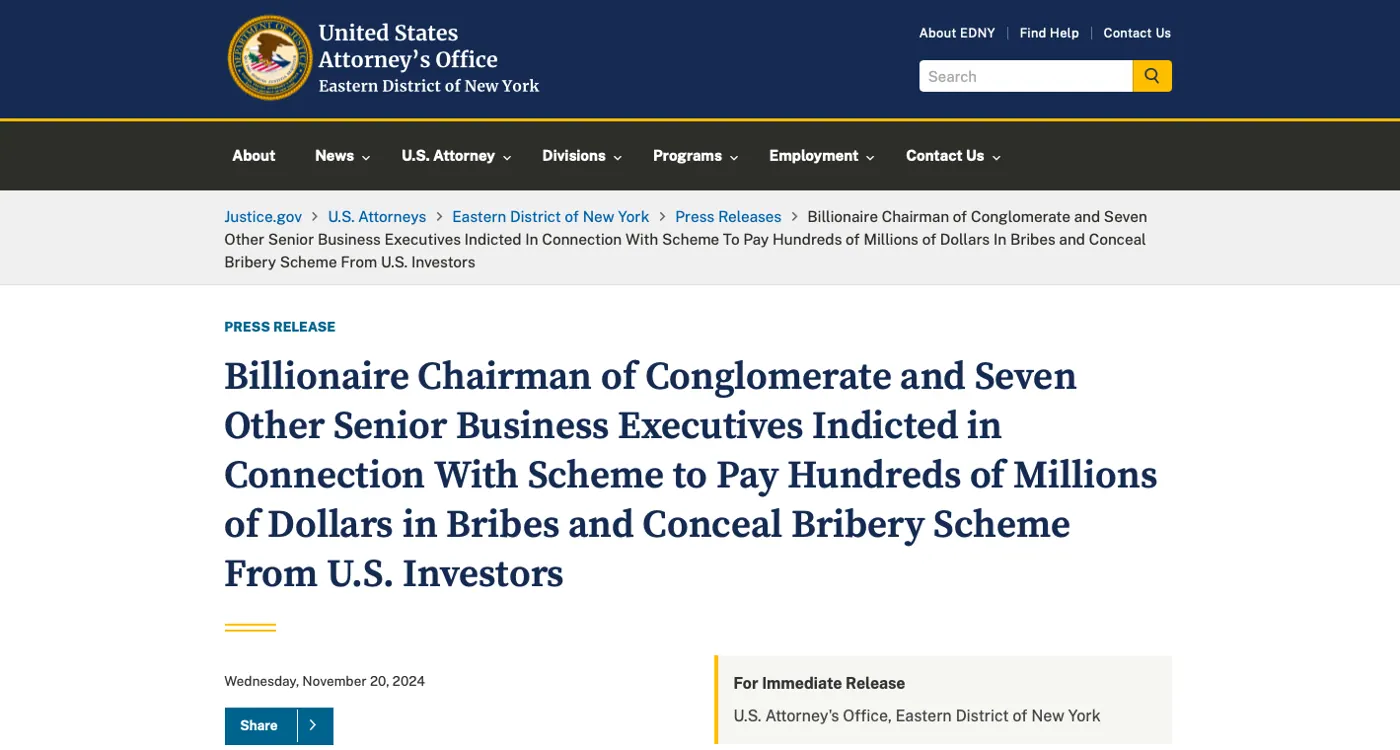

While the political drama played out, a seismic shock hit India’s corporate elite. Billionaire Gautam Adani, chairman of the politically connected Adani Group, stepped down from his flagship role at Adani Ports.
The reason? A storm brewing far beyond India’s borders. In November 2024, the U.S. Department of Justice unsealed an indictment accusing Adani and associates of a massive bribery and fraud scheme:
- Bribery: Allegedly paying $265 million to Indian officials for lucrative solar energy contracts.
- Fraud: Allegedly concealing the bribery while raising $2 billion from U.S. and global investors.
The Adani Group has denied the charges as “baseless.” But the case highlights a new reality: by courting foreign capital, Indian corporations have also invited foreign accountability—a form of scrutiny that may bypass weakened domestic regulators.
The Indian government’s muted response, treating the case as a purely private matter, has reignited debates over crony capitalism—where corporate empires and state policy blur into one. This time, however, the allegations carry the weight of international legal teeth.
Crisis Three: A Media Battleground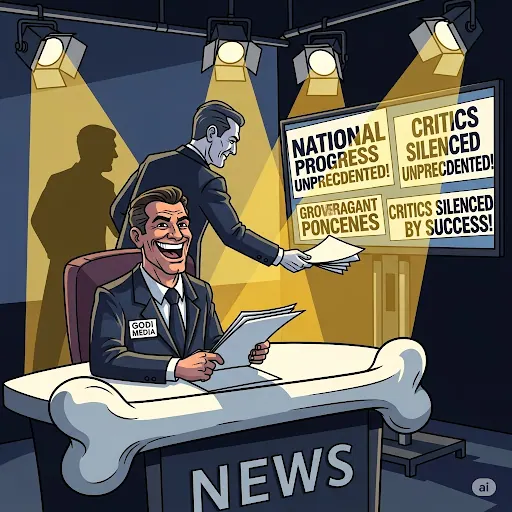

These storms are unfolding in a media environment increasingly defined by polarization and “godi media”—a press loyal to the powers that be.
On the electoral controversy, pro-government outlets framed the opposition’s claims as reckless attacks on a constitutional institution, amplifying the ECI’s stance while downplaying the data.
On the Adani scandal, the coverage was slow, muted, and reframed. Reports led with the company’s denial rather than the indictment. Prime-time debates pivoted the conversation into claims of a “foreign conspiracy” to derail India’s economic rise.
And then came the narrative reset. RSS chief Mohan Bhagwat, leader of the ruling BJP’s ideological parent, abruptly shifted public discourse to the “commercialisation” of healthcare and education—an issue capable of uniting the public and diverting attention from scandals.
The Pattern Behind the Crises
These are not three separate fires—they’re part of the same blaze.
- A government confident it can control the narrative via a compliant media.
- Institutions, like the ECI, that bend under political pressure.
- Corporate power that thrives in the absence of strong oversight.
It’s a self-reinforcing cycle: diminished institutional checks empower crony capitalism; the spoils of that capitalism feed political entrenchment; and media management ensures public perception stays favorable—until an external force, like the U.S. indictment, disrupts the loop.
International watchdogs have been sounding the alarm for years. The V-Dem Institute has reclassified India as an “electoral autocracy.” Freedom House rates it “Partly Free.” The warnings are no longer theoretical—they’re playing out in real time.
What’s at Stake
The stakes are enormous:
- For India: Eroded faith in elections risks long-term political instability.
- For its economy: A climate of cronyism and weak rule of law threatens the growth needed to lift millions from poverty.
- For the world: The decline of democratic norms at home undermines India’s claim as the “Mother of Democracy” and its role as a credible counterweight to authoritarianism.
India’s democracy has survived crises before. But the simultaneous targeting of electoral integrity, corporate accountability, and media freedom marks an inflection point unlike any in its modern history.
The path chosen now will not only define India’s future—it will echo far beyond its borders.

Originally published on PIOF Nepal’s Blogger website. This page has been migrated from the author’s backup.